How to Keep Pests Out of Your Garden Naturally
Stop sharing your harvest. A practical, no-nonsense guide to identifying and repelling common garden pests using safe, natural methods that actually work for real backyards.
By TheYardForge — outdoor and garden gear, analyzed honestly for real backyards
You walk out to check your vegetable beds and find your emerging bean seedlings have been mowed down to stubs overnight. The direct answer to keeping your garden from becoming an all-you-can-eat buffet is a layered defense: start with physical barriers and healthy soil, identify exactly what you're dealing with, and escalate only to targeted organic deterrents, not a broad-spectrum chemical bomb. Strong plants in rich soil are naturally more resistant, and most common pests have specific, manageable weaknesses. The goal isn't a sterile garden (that's impossible and unhealthy) but keeping damage below a threshold where you still get a real harvest.
Start With the Unsexy Foundation
Most pest problems are invited, not random. Stressed plants emit chemical signals that pests home in on. Building deep, living soil with compost and avoiding synthetic nitrogen-pushes creates tougher plants with thicker cell walls. Overhead watering late in the day leaves foliage damp all night, which is perfect for slugs and fungal issues. Water the soil line in the morning instead. Clear away hiding spots near beds: boards, dense weeds, and piles of decaying plant debris are R&R resorts for slugs, earwigs, and pill bugs. A clean, open perimeter between your lawn and your beds reduces nighttime traffic dramatically.
The Cheap, Instant Fix You Should Try First
If you only do one thing this week, make it a physical barrier. For soft-bodied crawling pests like slugs and snails, a 3-4 inch wide band of coarse, crushed eggshells or diatomaceous earth (the food-grade kind) around each plant works as a dessicating razor wire they typically won't cross. The catch is it must stay dry to be effective, so reapply after rain. For cabbage moths, carrot flies, and squash bugs, floating row cover is a game-changer. It's a featherweight white fabric you lay directly over the crop. It lets in light and water but physically blocks flying insects from laying eggs on your plants. Lay it at planting time, before you see a problem, and anchor the edges with soil or rocks. The limitation is you must uncover flowering crops like squash for a few hours in the morning for bee pollination, then re-cover. Skip row cover if you're the type who won't remember to do that.
Below is how the two main non-chemical approaches compare for different scenarios.
| Barrier Type | Best For | Key Weakness |
|---|---|---|
| Row Cover (Fabric) | Flying pests (moths, beetles, flies) | Must be removed for pollination |
| Diatomaceous Earth / Grit | Soft-bodied crawlers (slugs, snails) | Rendered useless by rain or watering |
Daily Patrol Triages 90% of Problems
This is the step nobody wants to do but it works. A short, daily walk with a cup of soapy water lets you knock off and remove the large-bodied pests that can skeletonize a plant in 48 hours. Here is the rhythm that catches them before they pop up:
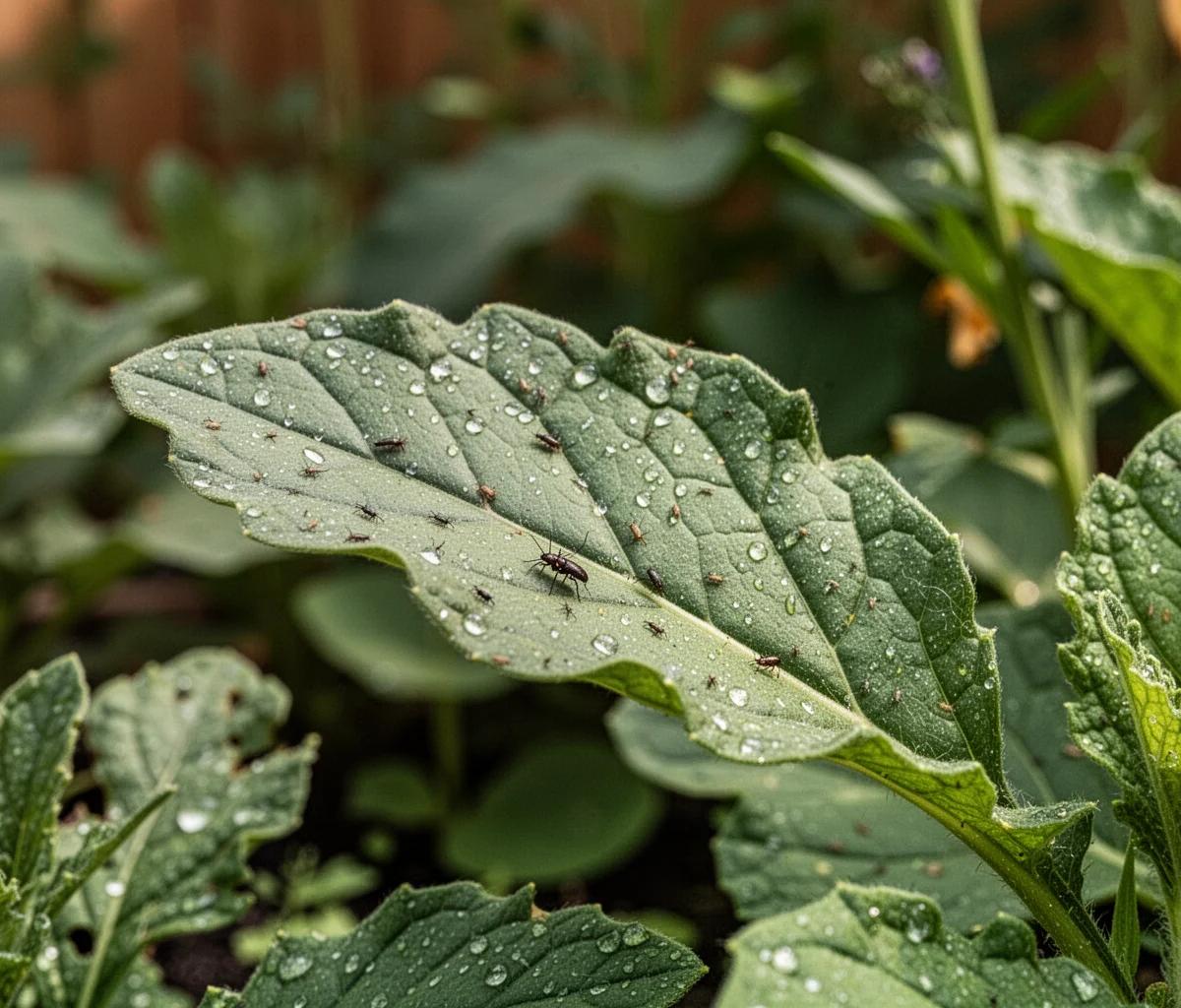
- Check leaf undersides early. Squash bug egg clusters (brick-red, laid in tidy geometric patterns) and cabbage worm eggs (tiny, white, singly laid) are almost always on the underside of the lowest leaves. Crush them in place or scrape them into your soapy cup.
- Hand-pick the adults at dusk. Many caterpillars and beetles feed actively as the light fades. A headlamp and ten focused minutes make a surprising dent.
- Prune the heavily infested tip. If aphids have completely curled the growing tip of a plant, the fastest control is often simply pinching off that few inches and disposing of it in a sealed bag, no spray needed.
One straightforward garden tool that makes the morning patrol infinitely more pleasant is a good pair of comfortable, sharp snips. In our analysis, the gear from Fiskars consistently balances sharpness and ergonomics for this type of daily, low-strain work. Quick note: some links in this article are Amazon affiliate links, they support the blog at no extra cost to you.
Related reading
- Brown Patches in Lawn How to Fix Fast
- How to Winterize Your Garden the Right Way
- Keep Pests Out of Your Garden for Good
FAQ
What is the number one mistake that makes pest problems worse? Killing beneficial insects with a broad-spectrum spray. When you wipe out ladybugs, lacewings, and parasitoid wasps, you remove the free labor that was keeping aphids and caterpillars suppressed, often triggering a much worse pest rebound.
Does companion planting really work? It is a support act, not a solo headliner. Interplanting strong-scented herbs like dill and cilantro provides nectar for beneficial wasps, and nasturtiums can pull aphids away from your beans as a trap crop. By itself, however, planting a marigold won't stop a determined hornworm.
Why are my pest-control sprays looking ineffective? Two reasons are common. First, you mixed the spray too weak, or didn't reapply after rain. Second, you're spraying aphids with a contact killer like insecticidal soap but missing the undersides of the leaves where 90% of the population is clustered. You must physically soak the colony to kill it.
Should I just use a pesticide to save my crop? If you have a severe infestation threatening to destroy a crop, look for a targeted organic option like Bt (Bacillus thuringiensis) for caterpillars exclusively. It kills only leaf-eating caterpillars and is harmless to bees. Avoid any product labeled as a systemic, broad-spectrum insecticide in a food garden, as those turn the whole plant toxic.
A pest-free garden isn't a realistic goal, but a pest-managed one absolutely is. The system that sticks is the one that fits a busy week: a physical barrier at planting time, a fast morning walk to look under the leaves, and a sharp pair of snips in your pocket to handle trouble where it starts.