Robot Mower vs Regular Mower What to Pick
Torn between a robot mower and a regular mower? We break down the real cost, effort, lawn quality, and which one fits your yard and lifestyle best.
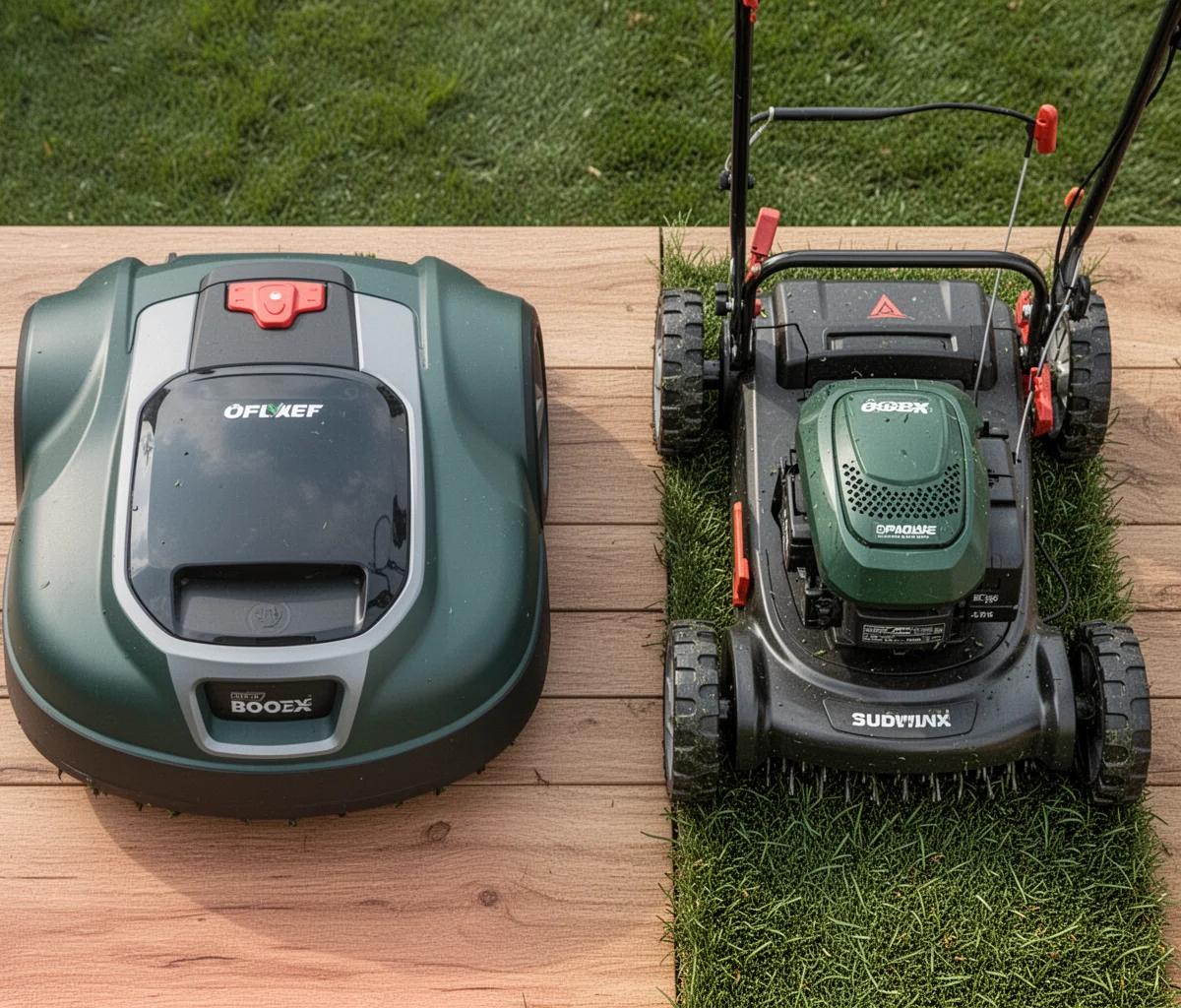
By TheYardForge — outdoor and garden gear, analyzed honestly for real backyards
You’re staring at your overgrown lawn on a Saturday morning, coffee in hand, and the last thing you want to do is spend the next hour pushing a heavy machine under the midday sun. That moment of dread is what makes a robot mower so tempting. The short answer is this: a robot mower cuts the grass for you daily with almost no effort, while a regular mower, gas, electric, or push, gives you more power and a lower upfront cost but demands your time every single week. Your choice hinges on whether you value your free time or your money more right now, and the size and shape of your yard.
The Real Cost of Your Saturday Morning
The price tag is the first filter. A decent walk-behind mower can be picked up for a few hundred dollars, while a capable robot mower for a typical suburban lawn is a bigger investment upfront. Check the current price on Amazon for models like the Worx Landroid or the Husqvarna Automower to see the range. But the true cost isn’t just the number on the sticker.
A regular mower burns your time and, if it’s gas-powered, fuel and oil. You’ll spend 30-60 minutes a week mowing, plus edging, plus seasonal maintenance like oil changes and spark plug replacements. A robot mower has a higher purchase price but near-zero running cost and effectively gives you dozens of hours of your life back each year. Based on owner reports we’ve analyzed, people consistently underestimate how much mental load a robot mower removes, there’s no “I have to mow the lawn this weekend” nagging in the back of your mind.
Quick note: some links in this article are Amazon affiliate links, they support the blog at no extra cost to you.
| Feature | Robot Mower | Regular Mower |
|---|---|---|
| Upfront Price | Higher (check Amazon for current pricing) | Lower |
| Weekly Effort | Almost zero, set and forget | 30-60+ minutes of physical work |
| Lawn Quality | Healthier grass from frequent micro-trims | Cleaner stripes, more control on rough terrain |
| Best For | Busy homeowners with medium, uncomplicated lawns | Large, uneven yards or those on a tight budget |
| Maintenance | Clean the blades and sensors occasionally | Oil changes, air filters, blade sharpening, fuel stabilizer |
What Your Lawn Actually Needs to Look Like
A robot mower cuts a tiny amount of grass every single day, and those fine clippings mulch back into the soil. The result, according to manufacturer specs and what we see from long-term owners, is a consistently green, dense carpet without the shock of a weekly scalping. It’s the stealth wealth of lawn care, your yard never looks freshly mowed, it just always looks good.
A regular mower is the tool for a different job. If you want the crisp, striped look of a baseball outfield, you need a traditional mower with a roller. If your lawn is bumpy, covered in tree roots, or has a steep 25-degree slope that would flip most robots, a regular walk-behind or self-propelled mower is the safer, more reliable choice. Robot mowers struggle on really rough terrain and tight, fragmented lawns with multiple disconnected patches.
How to Decide in Three Steps
- Audit your yard honestly. Measure your lawn’s total square footage and note any steep slopes, tight passages narrower than a doorframe, or areas separated by gravel paths or walls. Robot mowers need a contiguous, defined area with a boundary wire or GPS mapping, though some newer models like the Segway Navimow are moving to wire-free setups.
- Price your time. If you make a reasonable hourly rate, calculate how many hours per year you spend mowing, trimming, and maintaining a gas engine. Multiply that by your rate over the expected 5-7 year life of a robot mower. In our analysis, busy professionals often find the robot pays for itself in time alone within two years.
- Consider a hybrid setup. You don’t have to be a purist. A practical middle ground is a robot mower for the weekly maintenance of the main lawn areas, paired with a cheap electric trimmer and push mower for edges, slopes, and the once-a-season scalp or overseeding job. This gives you the daily-good-lawn effect without sacrificing hard-to-reach corners.
Related reading
- Robot Mower Not Charging Quick Fix Guide
- Best Cheap Robot Mowers That Actually Work
- Robot Mower Guide: Choose, Install, Maintain
FAQ
Will a robot mower work on a slope? It depends on the model. Most consumer robot mowers handle slopes up to a specified percentage, typically around 20-35%. Always check the manufacturer’s max slope rating for the exact model you’re considering, and be realistic about the steepest part of your yard.
Can a robot mower handle wet grass? Generally, no. While they can operate in light drizzle, wet grass clumps, sticks to the undercarriage, and reduces cut quality drastically. The sensors also perform worse in the wet, and the wheels can slip and tear up the turf.
Is a regular mower better for large lawns? Often, yes. For very large lawns over half an acre, a wide-deck riding mower or a zero-turn mower is much faster and more cost-effective than a single robot mower, which would need to run almost constantly and still might not keep up.
Do I still need a regular mower if I get a robot? Most owners we’ve heard from keep at least a basic string trimmer for edges and tight spots. For heavily neglected, overgrown grass, you’ll still need a standard mower to do the first initial cut before a robot can take over the maintenance mowing.
Conclusion
The choice comes down to what you’re buying: a robot mower is a subscription to free weekends, while a regular mower is a one-time ticket to a task you have to perform for years. Pick the robot if your lawn is modestly sized, fairly flat, and your free time is worth more than the upfront cost. Stick with a regular mower, whether gas or electric, if your terrain is a mess, you love the ritual of mowing, or the budget simply doesn’t stretch yet.