Bestway vs Intex Pool Pump Which One to Get
A straightforward Bestway pool pump vs Intex pool pump review. We break down the differences, flow rates, and which fits your above-ground pool setup honestly.
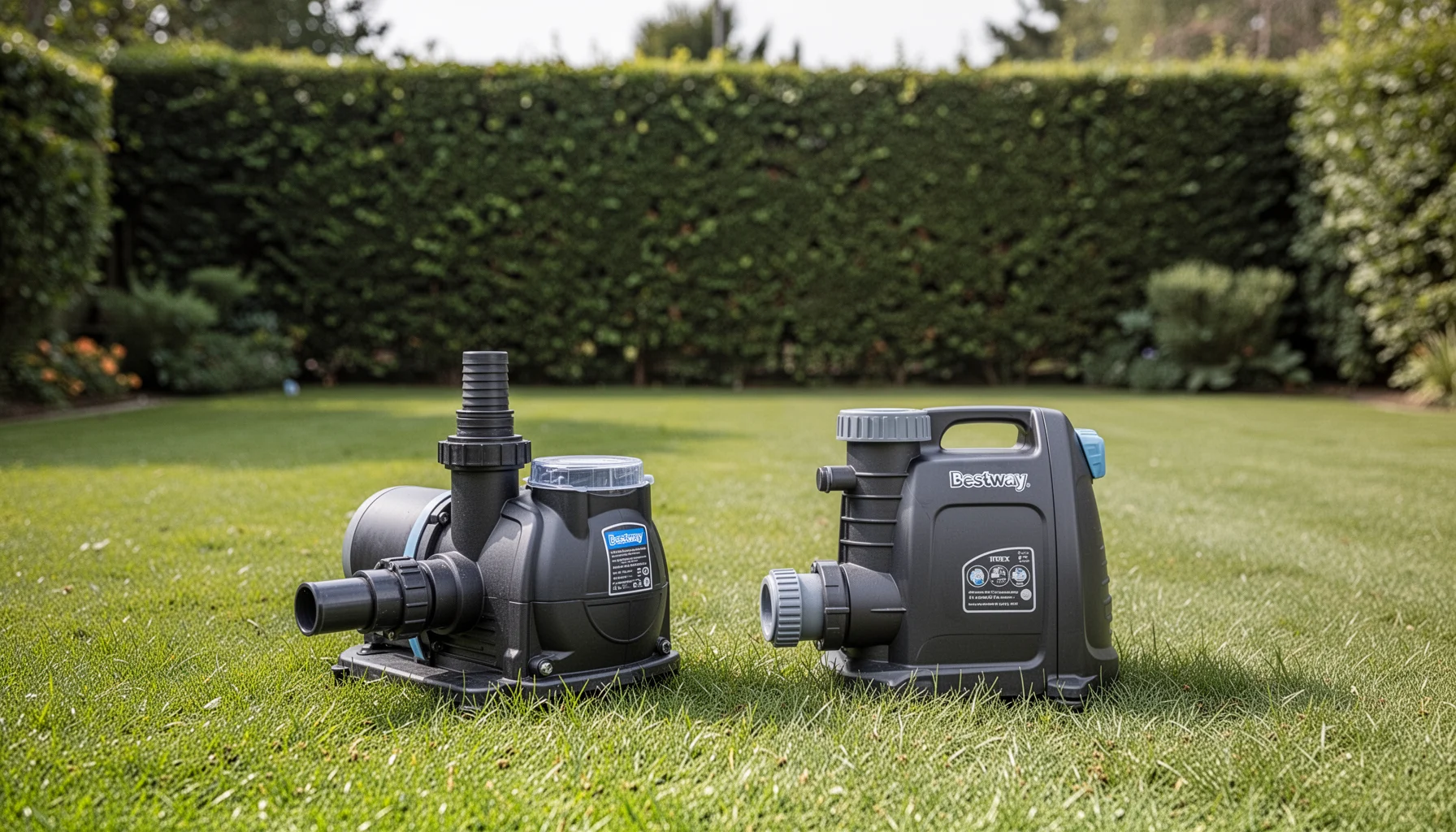
By TheYardForge — outdoor and garden gear, analyzed honestly for real backyards
The pump on your neighbor’s Intex pool has been humming quietly for three summers while yours struggles to keep the water clear, and now you’re staring at two replacement options wondering if there is even a real difference. There is, and it mostly comes down to what you need the pump to do. In the head-to-head analysis below, we compare the filter pump lines from Bestway and Intex based on their specs, owner reports, and where each fits in a real backyard. If you just need the bottom line: pick Intex if you want a long track record, strong flow rates for larger pools, and easy cartridge availability; pick Bestway if you are on a tighter budget with a smaller pool and plan to run the pump on a schedule. Both get the job done, but they are not identical.
Quick note: some links in this article are Amazon affiliate links, they support the blog at no extra cost to you.
What Actually Matters in These Pumps
Most above-ground pool owners do not need a science-class pump. You need something that catches debris, fits your pool’s hose diameter, and does not sound like a tractor. The three things to compare honestly are:
- Flow rate – how much water the pump can move per hour, which tells you how fast it turns over the pool volume.
- Filter type and size – cartridge-based filters dominate here, and the surface area determines how often you are rinsing it out.
- Plumbing compatibility – the hose connections and adapters that determine whether the pump mates with your existing pool wall ports.
From the owner reports we analyzed and cross-referenced with the manufacturer specs, both brands deliver reliable circulation for pools up to roughly 15,000 to 18,000 liters (around 4,000 to 4,800 gallons), but the exact model you pick changes the ceiling.
Head-to-Head Comparison
To keep it concrete, we lined up the core features you care about most when choosing between the two.
| Feature | Bestway Filter Pump | Intex Filter Pump |
|---|---|---|
| Typical flow rate (common models) | 1,249–3,028 L/h (330–800 GPH) | 2,006–4,542 L/h (530–1,200 GPH) |
| Pump body material | Reinforced plastic, compact footprint | Hard plastic, slightly larger housing |
| Filter cartridge availability | Proprietary Bestway cartridges, often sold in multi-packs | Intex Type A or B cartridges, widely stocked |
| Built-in timer | Common on mid-range models, simple 4–12 hour presets | Less common unless you buy a higher-tier sand filter combo |
| Best for | Budget setups, smaller Easy Set or Steel Pro pools, intermittent use | Medium to larger frame pools needing faster turnover |
| Skip it if | You have a 15-foot or larger pool and leave the pump running unattended for days | You only need a light-duty pump for a 8–10 foot splash pool and want the lowest purchase price |
Three Steps to Match the Pump to Your Pool
Use this quick logic before you click “buy,” because the strongest pump means nothing if the fittings are wrong.
- Check your pool’s hose connection diameter. Most Bestway and Intex pools use 32 mm or 38 mm hoses, but confirm on the product page for your exact model. Adapters exist, but a native fit is always less hassle.
- Calculate your pool volume and target turnover. You want the pump to cycle the full volume at least once every 4–6 hours. A 10,000 L pool wants roughly a 2,000 L/h pump, and rounding up is safer than rounding down.
- Decide if you plan to leave the pump running unsupervised. If yes, prioritize a model with a built-in timer or pair it with a simple plug-in timer. This is where some Bestway pumps pull ahead for set-and-forget families, while many basic Intex pumps rely on you to switch them off manually.
If your pool started life as an Intex kit, the Intex pump lineup already matches the hose threads, which saves you a trip to the hardware store. We have seen more owners frustrated by adapter hunting than by the pump itself, so do not skip that check. For a deeper dive into how we evaluate pool equipment, see our comparison of the Intex Pool Pump vs Bestway Pump.
Related reading
- Intex Pool Pump vs Bestway Pump Which Is Better
- Intex vs Bestway Above Ground Pool Comparison
- Best Above Ground Pool for Small Backyards
FAQ
Can I use an Intex pump on a Bestway pool and vice versa? Yes, as long as the hose diameter and thread type match. Many owners run cross-brand setups without leaks, but you may need an adapter or a hose clamp if the fittings differ slightly.
Which pump is quieter in a small yard? Owner reports describe both as “a low hum you can talk over.” Neither is silent, but the smaller Bestway models tend to have a slightly softer noise profile simply because they move less water.
Do these pumps work with saltwater systems? They can, but the pump itself does not generate chlorine. You would pair the pump with a separate saltwater chlorinator, and you should verify the impeller and housing materials are rated for salt exposure on the product page for your chosen model.
How often do I need to replace the filter cartridge? Expect to rinse the cartridge every couple of days during heavy use and swap in a fresh one every two to three weeks depending on debris load and pool size. Intex Type A cartridges are generally easier to find in local stores.
Is a higher flow rate always better? Not for very small pools. Pushing too much flow through an 8-foot pool can create a strong current and strain the wall fittings. Match the flow rate to the pool volume, do not just chase the biggest number.
The pump you choose shapes how much time you spend enjoying the pool versus scrubbing it. Neither brand reinvents the wheel here, but the right match turns a green-water headache into a quick cartridge rinse and a clear Saturday swim.