Intex vs Bestway Above Ground Pool Comparison
Intex vs Bestway above ground pools compared honestly. See the real differences in frame, liner, pump quality and which brand fits your backyard best.
By TheYardForge — outdoor and garden gear, analyzed honestly for real backyards
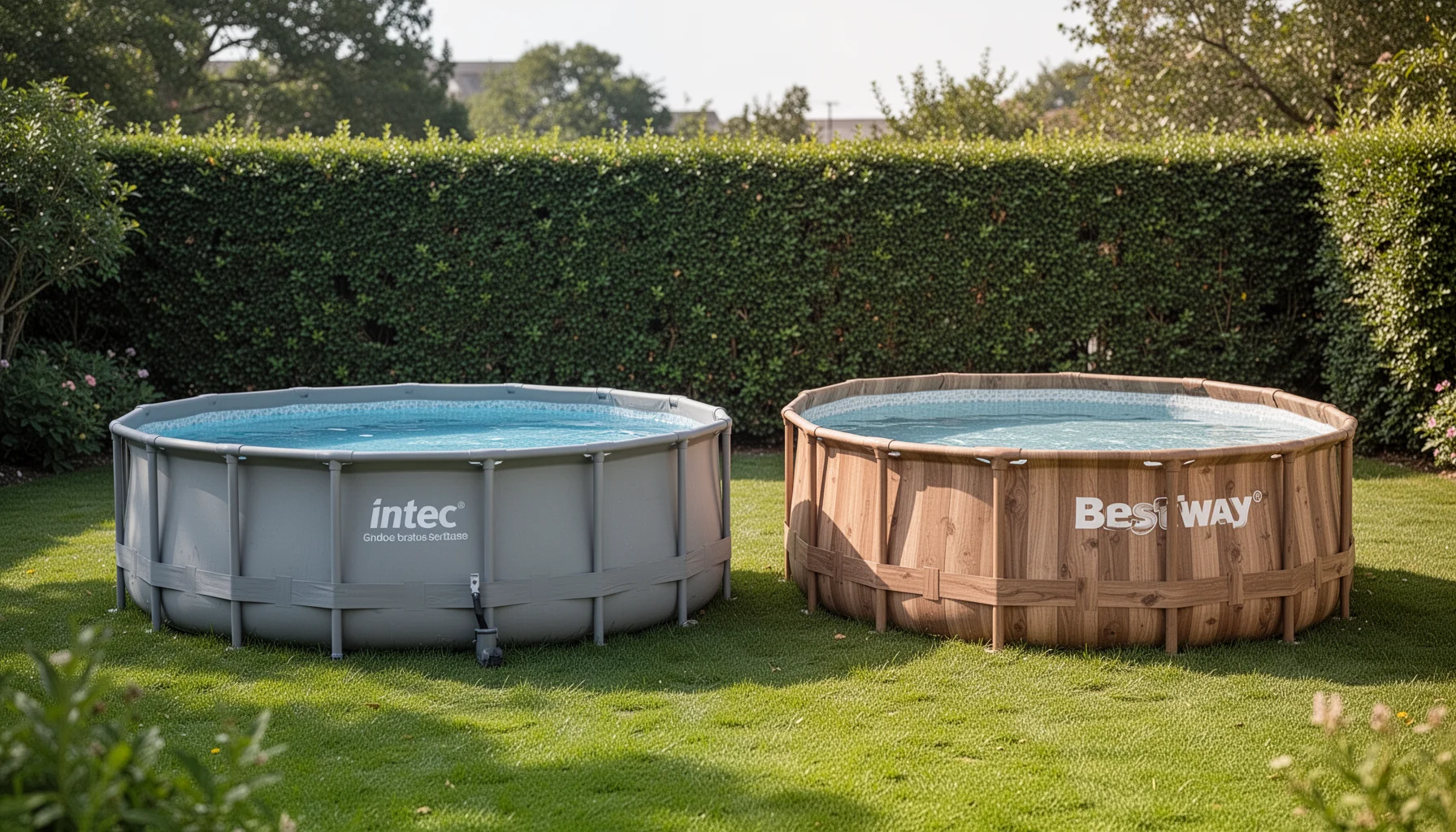
Your neighbor just unboxed a bright blue Bestway pool, and your brother-in-law swears by his Intex that has lasted three summers. Suddenly you’re stuck staring at two nearly identical-looking options online, wondering if there’s actually a difference worth caring about. The short answer is yes, though it is more about fit than about one brand being universally better. Intex pools lean toward the budget-conscious first-timer who wants a straightforward, metal-frame rectangle that just works for a few seasons. Bestway, particularly in its Steel Pro Max line, often bundles slightly thicker liner material and a marginally better filter pump out of the box, making it the stronger pick for families who plan to leave the pool up year-round or want a round pool that feels a touch more robust. The real decision comes down to which specific model fits your yard size, your patience for setup and the replacement-parts availability in your region.
What Actually Separates These Two Brands
Most shoppers notice the price tags first, and it is true that entry-level Intex and Bestway pools occupy nearly the same budget tier. Check the current price on Amazon for both, and you will likely find them neck and neck. The meaningful differences live in three areas that only show up once the box is open.
Frame material and joint design. Intex uses powder-coated steel tubing with T-joint connectors made of molded plastic. The design is proven and simple, but those plastic connectors are the most common failure point after repeated assembly or a harsh winter. Bestway’s Steel Pro Max frames use a similar steel gauge but often include corrosion-resistant coatings that hold up slightly better in humid or coastal climates. The connectors on mid-range Bestway models also feel marginally tighter out of the box, which matters for a creak-free pool at full water load.
Liner thickness and feel. This is the one owners actually notice with bare feet. According to manufacturer specs, standard Intex liners sit around 0.53 mm on entry models, while Bestway’s equivalent often lands around 0.62 mm. A fraction of a millimeter might sound trivial, but it translates to a noticeably stiffer floor underfoot and better puncture resistance if a dog or a dropped toy hits the side. Neither is puncture-proof, so a ground cloth underneath is non-negotiable either way.
Included pump quality. Both brands ship cartridge filter pumps with their starter kits, sized to the pool volume. In our analysis of owner reports, Bestway’s bundled pumps tend to move slightly more water per hour at the same voltage, which buys you one extra turnover cycle per day on smaller round pools. That means clearer water with less manual skimming. Intex pumps are perfectly functional but reward owners who plan to upgrade to a sand filter sooner, something worth reading about in our Intex pool pump vs Bestway pump comparison.
Quick Comparison Table
| Feature | Intex (Standard Metal Frame) | Bestway (Steel Pro Max) |
|---|---|---|
| Frame connector type | Molded plastic T-joints | Reinforced composite/pin-lock |
| Liner thickness | ~0.53 mm (entry models) | ~0.62 mm (entry models) |
| Included pump flow rate | Adequate, upgrade often recommended | Slightly higher GPH on round models |
| Best for… | First-timers, seasonal setup | Families, long-term setup |
| Skip if… | You want heavy-duty fittings | You only need a 2-month summer pool |
How to Decide in 4 Honest Steps
- Measure the actual flat ground you have, not the lawn you wish you had. Intex excels at rectangular pools (think 9×6 feet or 12×7 feet) that tuck neatly against a fence. Bestway dominates the round pool space, and a 12-foot or 15-foot circle demands more yard real estate than most people first estimate.
- Audit your electrical access honestly. Both brands need a GFCI-protected outlet within the pump cord’s reach, typically 10 to 15 feet. If running a heavy-duty extension cord is your only option, pause and consult a qualified electrician. This is not a corner worth cutting, and no manual should give you wiring instructions for a workaround.
- Check replacement-part availability in your country. Intex has a deeper legacy in the US, so finding a replacement pump hose or a spare frame joint is often faster through major retailers. Bestway parts are catching up but still lag in some regions. A pool with no available filter pump by July is a pond.
- Factor in the hidden costs before comparing sticker prices. A quality ground cloth ($20–$40), a better test kit ($15–$25) and a proper cover ($30–$60) will land in your cart regardless of brand. Budget for those, then see which pool still fits. Quick note: some links in this article are Amazon affiliate links, they support the blog at no extra cost to you.
Related reading
- Bestway vs Intex Pool Pump Which One to Get
- Intex Pool Pump vs Bestway Pump Which Is Better
- Best Above Ground Pool for Small Backyards
FAQ
Do Intex and Bestway pools use the same filter pumps and hoses? Not universally. The hose connections and thread patterns differ on many models, so a Bestway pump rarely plugs directly into an Intex liner port without an adapter. Always verify compatibility on the product page for your specific model.
Which brand is better for leaving the pool up over winter? Based on owner reports, Bestway’s slightly thicker liner and corrosion-resistant frame coatings give it a small edge for year-round setups, but neither is rated for freezing without proper winterizing. Drain and cover procedures matter far more than the brand name.
Are rectangular Intex pools stronger than round Bestway ones? Rectangular pools generally require reinforced side-wall design to resist bowing, which Intex handles well with extra bracing on their larger metal-frame models. Round Bestway pools spread water pressure evenly, so they feel inherently sturdy. Different engineering, not a strength contest.
Can I buy a saltwater system for either brand? Yes, both Intex and Bestway make compatible saltwater chlorinators, but the pump and filter must also be rated for salt use. Standard bundled cartridge pumps are not, so plan for a full pump upgrade if you want saltwater.
The honest truth is that Intex and Bestway both deliver exactly what a steel-frame above-ground pool should give you at this price: a summer of relief from the heat and a learning curve on water chemistry that you either love or loathe. If your priority is a rectangular pool that slots into a narrow side yard and you do not mind eventually upgrading the pump, Intex is the familiar, proven choice. If you want a round pool and value the slightly thicker liner with a better-out-of-the-box pump, Bestway earns its place. Neither will survive an unsupervised dog, a skipped winter drain or a pump left running dry, so the winner is the one you actually maintain.