Robot Mower vs Regular Mower Which Is Better
Robot mower or regular mower? We compare cost, effort, cut quality, and lawn fit so you can pick the right one for your yard. A practical guide with clear.
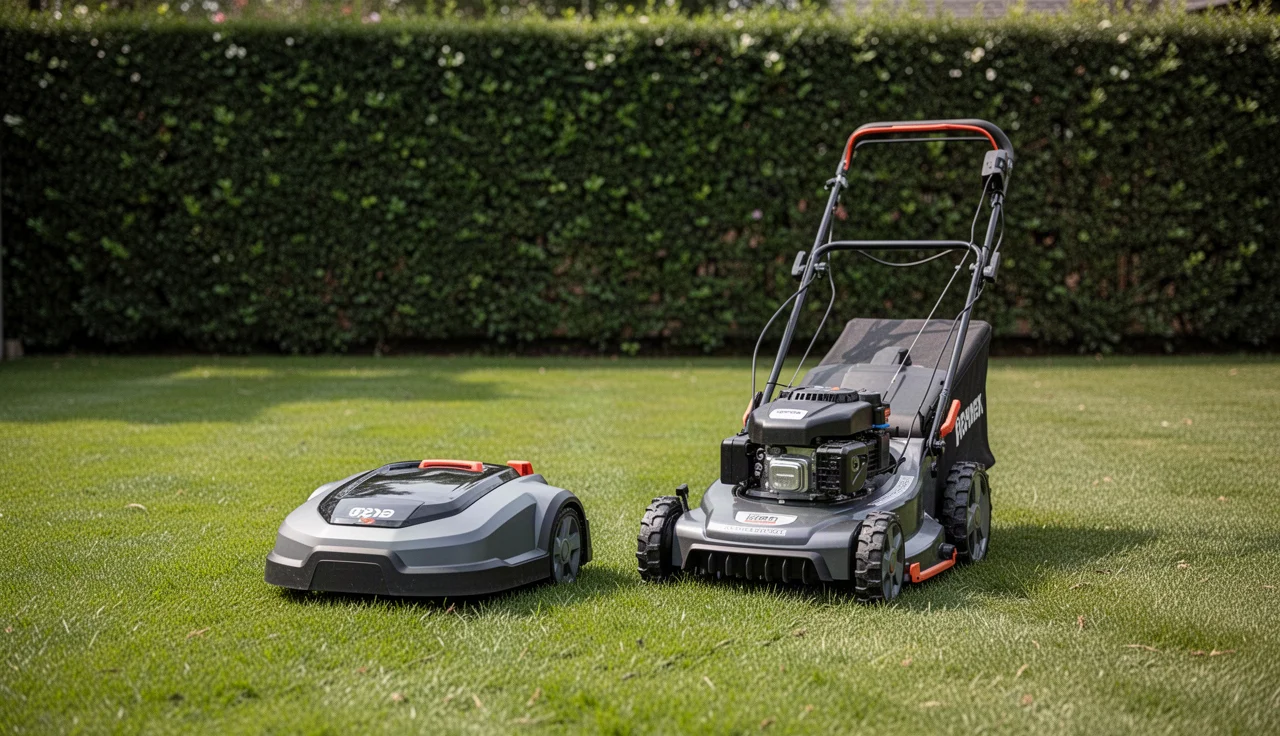
By TheYardForge — outdoor and garden gear, analyzed honestly for real backyards
You are standing in the garage on a Saturday morning, looking at a lawn that needs cutting, and you have already mentally spent the next hour of your life pushing a machine through grass. Here is the direct answer: a robot mower is better if you value time and have a relatively simple, obstacle-light lawn, while a regular mower is better if you have a large, rough, or complex yard and do not want to spend on automation. Neither one wins for everyone, and the real question is what your weekends are worth and what your lawn actually looks like.
This comparison is based on manufacturer specs and owner reports, not a lab test, but the trade-offs are consistent across the board. A robot mower cuts little and often, keeping grass at a steady height without you doing anything. A regular mower cuts everything at once and demands your time, but it handles thick grass, slopes, and debris far better. Cost, maintenance, and lawn condition decide the rest.
Cost and Effort Up Front
The first difference is obvious. A quality robot mower costs more to start, often significantly more, so check the current price on Amazon before you assume it fits the budget. A regular mower, whether gas or electric, is usually cheaper for the same lawn size. But the robot mower pays back in time, because once it is set up, you are not mowing. You are doing something else.
Quick note: some links in this article are Amazon affiliate links, they support the blog at no extra cost to you.
For robot options, the Worx Landroid and Husqvarna Automower are the two names people cross-shop most. We have a deeper breakdown of that exact matchup if you want the full picture.
What Each One Actually Does Well
| Factor | Robot Mower | Regular Mower |
|---|---|---|
| Time spent mowing | Almost none | 30-90 minutes per cut |
| Upfront cost | Higher | Lower |
| Thick or wet grass | Struggles | Handles it |
| Slopes | Varies by model, check specs | Usually fine |
| Obstacles | Needs boundary setup | You steer around them |
| Maintenance | Blade changes, occasional cleaning | Fuel, oil, filters, spark plugs |
A robot mower is a background tool. It trims tiny amounts frequently, which actually makes the lawn look healthier because it never scalps the grass. A regular mower cuts more aggressively and is the only real choice if you let the grass get long between cuts.
How to Decide in 3 Steps
- Measure your lawn honestly. If it is under roughly half an acre and mostly open, a robot mower becomes practical. If it is larger, uneven, or full of trees and garden beds, the setup becomes more work than the mowing.
- Check your weekly schedule. If mowing feels like stolen time every single week, that is the main argument for a robot mower. If you genuinely enjoy the ritual and the stripes, a regular mower is not a compromise.
- Look at your grass type and cutting height. Thick, fast-growing grass in a wet climate is harder for many robot mowers. According to manufacturer guidance, you may need to set a more frequent schedule and accept that it will not leave the same crisp finish as a walk-behind mower on a bad week.
For a detailed comparison of the two biggest robot brands, see our Robot Mower vs Regular Mower What to Pick guide.
Common Mistakes People Make When Switching to a Robot Mower
The biggest mistake is treating a robot mower like a regular mower and expecting it to power through an overgrown lawn on day one. If your grass is already tall, a robot mower will struggle, clog, and leave uneven patches. You need to cut the lawn short with a regular mower first, then let the robot maintain that height from there. Another common error is placing the charging station too far from the mower's primary cutting zone. If the robot has to travel across a long stretch of lawn just to reach the grass, it wastes battery and wears out faster. Place the base station centrally, in the shade if possible, and keep the approach path free of narrow gaps. Forgetting to adjust the cutting schedule for seasonal growth is also frequent. Grass grows faster in spring, so if you leave the mower on a summer schedule, it will fall behind and you will see clumps. Manufacturer guidance, including from Husqvarna, suggests increasing mowing frequency during peak growth and reducing it during dry spells.
How to Get the Best Results from Either Machine
For a regular mower, the most overlooked upgrade is blade sharpness. A dull blade tears grass instead of cutting it, leaving brown tips and making the lawn more vulnerable to disease. Sharpen or replace the blade at least once per season, or every 25 hours of use. For robot mowers, the equivalent habit is cleaning the underside. Grass clippings build up under the deck, reducing cutting quality and forcing the motors to work harder. A quick scrape with a plastic scraper once a week during mowing season keeps the blades effective. Also, if you have a robot mower, reconsider your lawn edges. Hard borders like stone or brick reduce the need for a trimmer, while soft edges against flower beds will still require manual cleanup. For regular mowers, vary your mowing pattern each week. Mowing the same direction every time compacts the soil and trains the grass to lean one way, which leads to uneven growth. Alternating between horizontal, vertical, and diagonal passes gives you a healthier lawn and a more professional finish.
FAQ
Do robot mowers really save time? Yes, because they run on a schedule while you are doing other things. The time you save is real, but you still spend a few hours on setup and occasional maintenance.
Can a robot mower replace a regular mower completely? In many yards, yes, especially small-to-medium lawns with clean edges and limited obstacles. For rough terrain, steep slopes, or very thick grass, a regular mower is still the safer backup.
Are robot mowers more expensive to run? They are cheaper to run day to day because they use electricity instead of gas, but blade replacements and occasional boundary wire repairs add up over the years.
Which is better for a large lawn? A robot mower depends more on the model's maximum area rating, so check that spec on Amazon. For very large or irregular lawns, a riding or self-propelled regular mower is often more reliable.
Do robot mowers cut as cleanly as a regular mower? Not always. Because they cut small amounts constantly, the lawn looks even, but the distinct striped finish of a walk-behind mower is hard to match.
In our analysis, the decision usually comes down to one thing: do you want to mow, or do you want the grass to just stay short on its own. If the answer is the second one, a robot mower is worth the upfront cost. If your lawn fights back with weeds, slopes, or size, keep the regular mower in the garage and spend the robot budget on something else.