Segway Navimow Robot Mower Review Worth Your Money
We analyze the Segway Navimow robot mower based on specs and owner reviews to see if its GPS navigation is worth the price for your lawn.
By TheYardForge — outdoor and garden gear, analyzed honestly for real backyards
You've probably watched a robot vacuum effortlessly map your living room and wondered why your lawn can't get the same treatment. The Segway Navimow is one of the few robot mowers that finally brings that level of precision to your yard, but it comes with a price tag that makes you pause.
The short answer: the Segway Navimow is worth it if you have a medium to large lawn with decent GPS signal and you value boundary-free setup over a bargain price. Its virtual mapping system means no perimeter wire to bury, and owners consistently praise how cleanly it handles edges. But it's not for everyone. If your yard is tiny, heavily shaded, or you're on a strict budget, there are cheaper wired alternatives that do the job fine.
Quick note: some links in this article are Amazon affiliate links, they support the blog at no extra cost to you.
How the Navimow's GPS Navigation Works
Unlike traditional robot mowers that follow a buried perimeter wire, the Navimow uses a GPS-based positioning system paired with a sensor module you place in your yard. According to the manufacturer, this lets you map your lawn virtually through the companion app, telling the mower exactly where to cut and where to avoid.
In our analysis of owner reports, the biggest advantage here is setup time. There's no trenching, no staking wire every few inches, no hunting for a wire break two summers later. You map the boundaries once, adjust them in the app if needed, and the mower handles the rest.
The trade-off is signal reliability. If you have heavy tree cover, tall walls, or a yard that sits in a GPS shadow, owners report the Navimow can lose positioning and drift. The manufacturer recommends an open sky view for the sensor module, and the mower itself needs a reasonably clear line to satellites.
What Setup Actually Looks Like
- Place the GNSS sensor module in an open area, ideally with a clear sky view
- Charge the mower fully before its first run
- Use the app to walk or drive the mower around your lawn's perimeter
- Mark exclusion zones for flower beds, ponds, or play areas
- Create a cutting schedule based on your lawn size and grass growth
The whole process typically takes under an hour for an average yard, which beats a full weekend of burying wire.
Performance and Limitations You Should Know
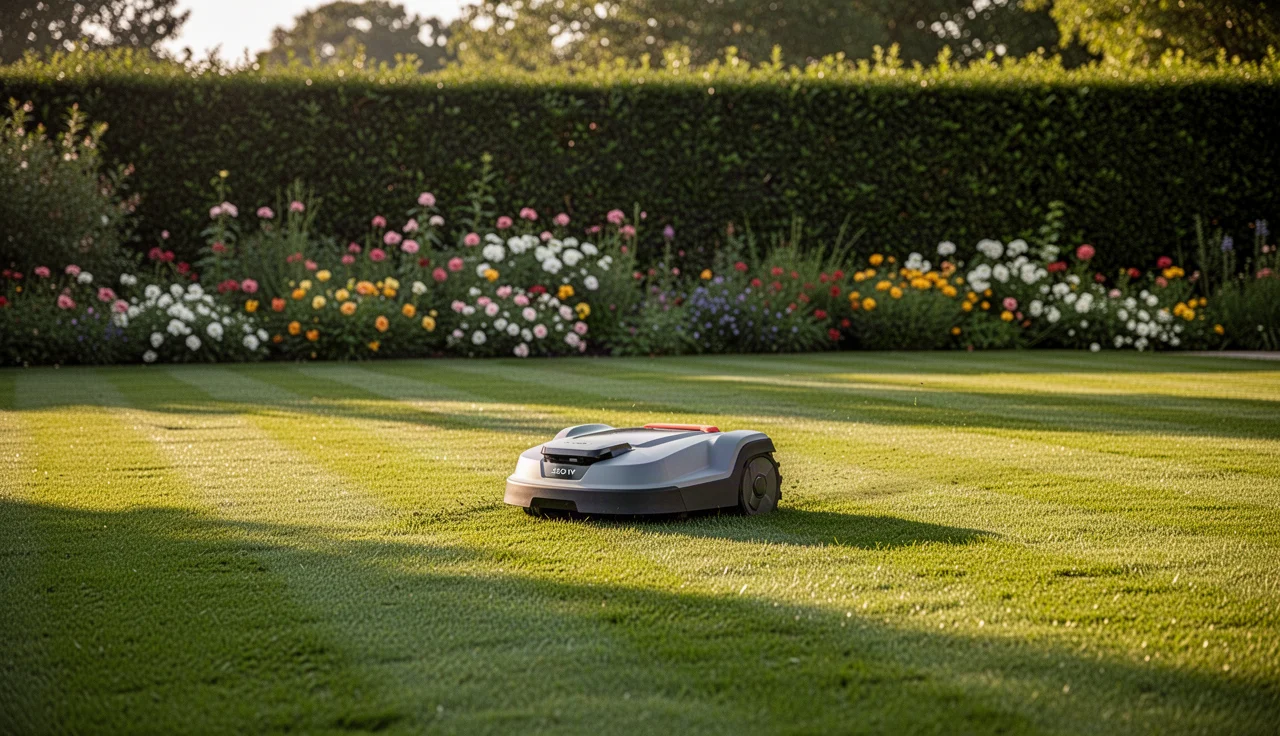
The Navimow doesn't use the random bouncing pattern of cheaper robots. It cuts in systematic parallel lines, which according to the manufacturer gives you a more even finish and better edge coverage. Most owners confirm this is the mower's strongest selling point: it looks like your lawn was cut by a human, not nibbled at by a confused Roomba.
| Feature | Segway Navimow | Traditional Wired Robot Mower |
|---|---|---|
| Boundary setup | Virtual GPS mapping | Buried perimeter wire |
| Cutting pattern | Systematic lines | Random or guided |
| Setup time | Under 1 hour | Half day or more |
| GPS dependency | High | None |
| Wire break risk | None | Yes, real |
The cons are real, though. The Navimow comes at a premium price point compared to wired models like the Worx Landroid. Check the current price on Amazon to see the gap for yourself. If you have a yard under 1,000 square feet, you're likely overpaying for capability you don't need. A smaller, simpler mower like those covered in our best robot mower for small yards review makes more financial sense.
Slope handling is another point to verify. The manufacturer lists a maximum slope spec, but real-world performance depends on grass condition and moisture. Always confirm the exact figure for your chosen model on the product page before buying.
How the Navimow Compares to Other Options
The main comparison people make is against the Husqvarna Automower, which is the established premium name in this space. The Automower offers proven reliability but typically costs even more and still relies on wire-based setup for most models. The Navimow undercuts it on price while offering the GPS advantage.
For budget-conscious buyers, the Worx Landroid and the Greenworks robot mower both deliver solid cutting without the GPS premium. You trade setup convenience for savings.
Who should buy the Navimow: owners with medium to large lawns, good GPS visibility, and a preference for clean virtual mapping over wire installation.
Who should skip it: small-yard owners, heavily shaded properties, and anyone who wants a robot mower under $600. The Navimow is a tool for people who value precision and modern setup, not a budget compromise.
FAQ
Does the Segway Navimow require a perimeter wire?
No. The Navimow uses GPS-based virtual boundaries instead of a buried perimeter wire, which is its main differentiator from traditional robot mowers.
How big of a lawn can the Navimow handle?
Coverage depends on the specific model, with some versions rated for larger lawns than others. Check the manufacturer specs for your chosen model on Amazon to confirm the exact coverage area.
Is the Navimow good for sloped yards?
The manufacturer lists a maximum slope spec, but performance varies with grass conditions. If your yard has significant incline, verify the exact spec before purchasing.
What happens if the Navimow loses GPS signal?
According to owner reports, the mower can pause, drift slightly, or return to base in areas with poor satellite visibility like heavy tree cover. The sensor module placement matters significantly.
Does the Navimow cut in random patterns?
No, it uses systematic parallel line cutting, which gives a more even finish than random-pattern mowers and is one of the features owners praise most.
The Segway Navimow earns its price when GPS mapping and clean cutting lines matter more to you than upfront savings. For small yards or dense shade, you're better served elsewhere. Match the mower to your lawn, not the marketing.