Best Small Backyard Greenhouse Picks for 2026
Find the best greenhouse for a small backyard based on frame strength, panel type, and assembly. Honest pros, cons, and who should skip each pick.
By TheYardForge — outdoor and garden gear, analyzed honestly for real backyards
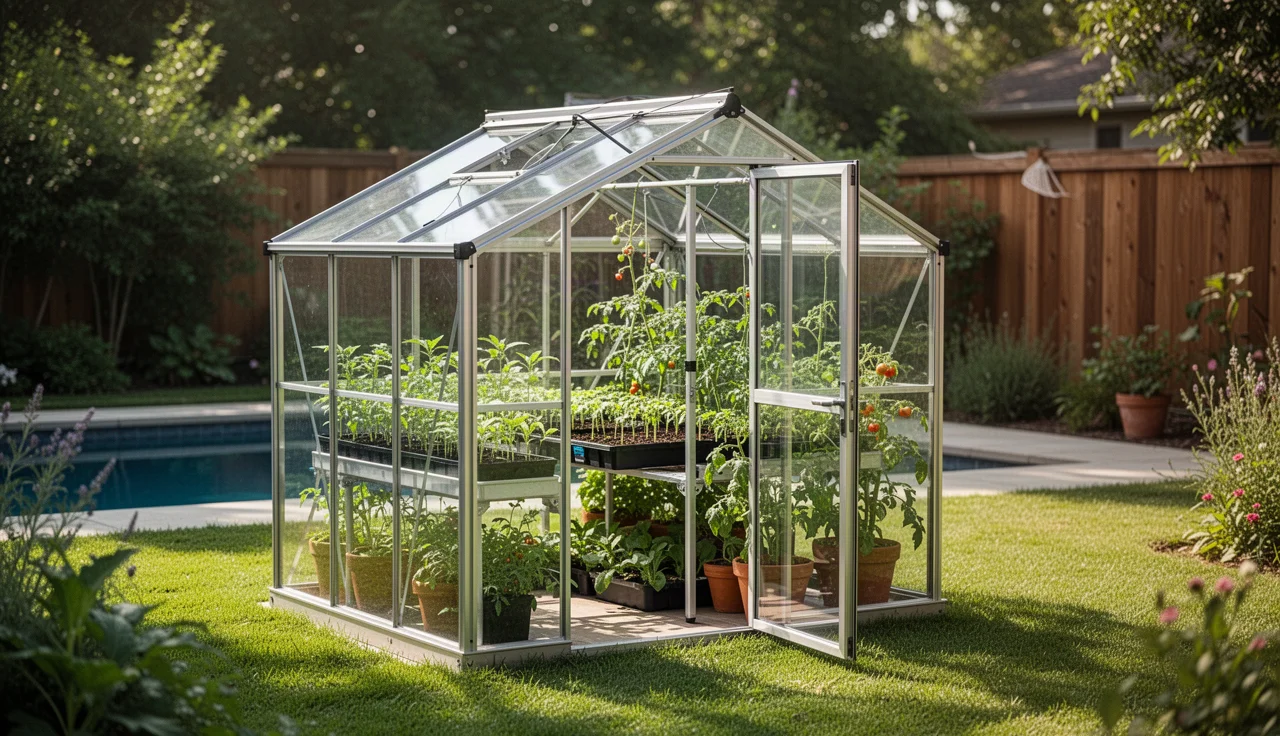
A tight backyard still has room for fresh tomatoes in February, if you pick the right frame. The best small backyard greenhouse for most people is a polycarbonate or reinforced PVC model under 8 x 6 feet, with good ventilation and a frame that can handle real wind. Based on specs and long-term owner reports, the Palram hybrids hold up best for permanent placement, while lighter Outsunny walk-ins make more sense for renters or seasonal seed-starting. If you have never owned one, the two things that matter more than size are panel material and anchoring, and getting those wrong is what turns a greenhouse into a crumpled tarp by July. Here is exactly where each type fits in a real yard.
Quick note: some links in this article are Amazon affiliate links, they support the blog at no extra cost to you.
What Actually Matters in a Small Space
A small greenhouse fails from three things, in this order: wind, overheating, and flimsy connectors. Polycarbonate twin-wall panels beat sheet plastic every time for insulation and surviving a storm, but they cost more and add weight. A galvanized steel base and a frame you can bolt to a deck or pavers matter more than the panel spec on paper. If the kit includes only thin stakes, you are buying a kite.
Ventilation is non-negotiable, especially under 50 square feet. A small structure heats up fast, so at minimum look for a roof vent and a door you can leave open. Automatic vent openers are nice, but a manual vent you actually use beats an automatic one you forget.
| Feature | Palram Hybrid | Outsunny Walk-in |
|---|---|---|
| Best for | Permanent setup, windy spots | Seasonal starts, rental yards |
| Panel type | Twin-wall polycarbonate | Reinforced PVC cover |
| Assembly effort | Moderate, clearer manual | Higher, more parts |
| Who skips it | Tight budget, temporary use | High wind, year-round growing |
Three Solid Picks for a Small Backyard
Palram Hybrid is the one we recommend most often for a permanent corner bed. It uses polycarbonate panels, a rust-resistant aluminum frame, and a design that is less likely to rattle apart in spring gusts. The tradeoff is real though: assembly takes a full afternoon and the base needs to be level or the panels will fight you. Skip it if you are renting or only want to harden off seedlings for a month. You can check the current price for Palram greenhouses on Amazon.
Outsunny Walk-in makes sense when you need something up in a weekend and down in a season. The PVC cover is cheap to replace and the frame is light enough to move with two people. The known weakness is the cover itself, which can tear under heavy snow or prolonged UV. It is a seed-starting and shoulder-season tool, not a four-season structure. See the Outsunny garden range on Amazon for current pricing.
Keter resin frames sit in between, ideal if you want the look of a glasshouse without the maintenance. They are built from weather-resistant plastic, never need painting, and survive kids bumping into them. The catch is ventilation: many models have limited roof openings, so overheating in full sun becomes your job to manage. If that sounds like your yard, check the Keter garden furniture options on Amazon.
How to Set Up Without Regretting It
- Pick the spot first, the greenhouse second. Morning sun with afternoon shade is the sweet spot in hot climates.
- Level the ground or build a simple paver base. A slope of even an inch throws the frame out of square.
- Anchor before you glaze or cover. Concrete anchors for hard surfaces, heavy ground stakes for soil.
- Set up ventilation day one, not after the first heat wave. Leave the door open while you work.
- For more budget-friendly frame ideas, see our guide to cheap greenhouse ideas for a small garden.
Common Mistakes That Kill Small Greenhouses Early
The most common failure we see is anchoring that looks fine until the first gust. People zip-tie a frame to a couple of tent pegs, then act surprised when it rolls into the fence. If you are on soil, use at least four heavy-duty ground anchors rated for the footprint, and drive them at an angle away from the frame. On a deck or patio, lag bolts through the base into the boards beat sandbags every time.
The second mistake is treating a PVC cover like a permanent roof. It is not. Reinforced covers handle two or three seasons of UV, then the seams start to split, usually at the corners where the frame rubs. Keep a roll of clear repair tape on hand, and plan to replace the cover in spring, not mid-season when a frost is coming.
The third mistake is orientation. A greenhouse jammed against a north-facing fence gets no morning sun and turns into a mold box. A south-facing wall in a hot climate cooks everything by noon. Give the structure room to breathe on at least two sides, and if you can only pick one side, pick the one that catches morning light.
Real-World Layouts for Tight Yards
A 6 x 4 greenhouse does not need to sit in the middle of the lawn like a shed. Tuck it against a shed wall or along a side return where you currently store empty pots. The structure becomes a backdrop, not an obstacle. In a 20-foot-wide yard, placing it in the back corner leaves room for a compost bin, a hose reel, and a path wide enough for a wheelbarrow.
If your yard is shaded by a big tree, do not fight it. Position the greenhouse on the sunniest edge of the canopy and use it for shade-tolerant greens, not tomatoes. Alternatively, build a small paver pad at the end of a patio and use the greenhouse as a windbreak for a seating area. The structure earns its footprint when it does two jobs at once.
Use vertical space inside instead of buying a bigger footprint. Hang a shoe organizer on the inside wall for seed packets and hand tools. Mount a wire shelf above the door for trays of microgreens. A 6 x 4 with hooks, a shelf, and a grow bag rail grows more than a cluttered 8 x 6 with a bench in the middle.
Related reading
FAQ
What size greenhouse is best for a small backyard? A 6 x 4 or 6 x 8 foot model is enough for a family's salad greens, herbs, and a few tomato plants without eating the yard.
Is polycarbonate or PVC better for a small greenhouse? Polycarbonate insulates better and lasts years longer, but costs more. PVC covers are cheaper and fine for seasonal use if you accept replacing them.
Do I need a building permit for a small greenhouse? Rules vary by city and county. Check local codes before buying, especially if the structure is over a certain square footage or attached to a building.
How do I keep a small greenhouse from overheating? A roof vent, an open door, and shade cloth in summer make the biggest difference. In hot climates, an automatic vent opener is worth the extra cost.
A small backyard greenhouse works when the frame, anchors, and ventilation are stronger than the first real storm. Pick Palram for permanence, Outsunny for flexility, or Keter for low maintenance, and you will spend more time growing than repairing.