Coleman or Intex Above Ground Pool, Which Fits You
Coleman vs Intex above ground pools compared on durability, setup, and price. Find the right one for your yard, budget, and season length.
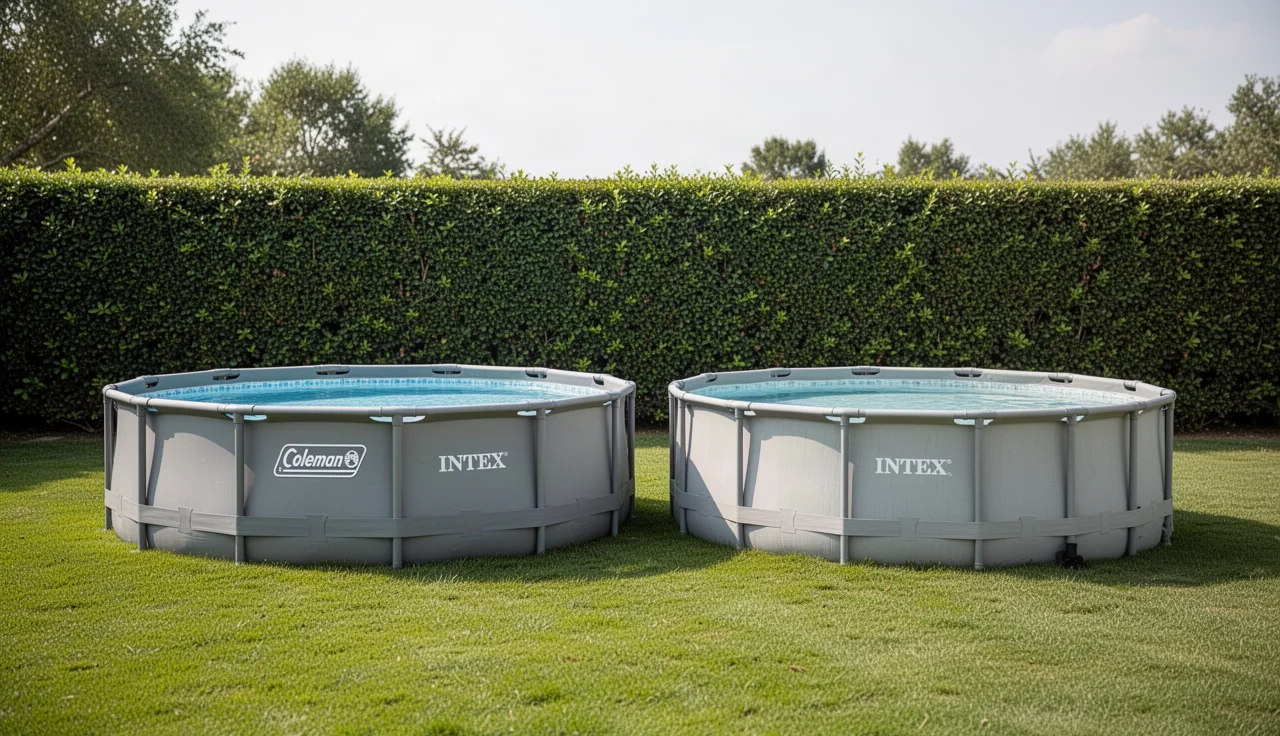
By TheYardForge — outdoor and garden gear, analyzed honestly for real backyards
You have a flat spot in the yard, a hot summer ahead, and two brand names keep showing up in every search: Coleman and Intex. Both sell steel-frame and inflatable pools that look nearly identical in photos, so the choice feels like a coin flip. Here is the direct answer: if you want the widest range of sizes, shapes, and bundle options at aggressive prices, Intex is usually the safer pick. If you want a simpler lineup with a slightly tougher frame and you plan to leave the pool up all season, Coleman holds its own. Based on the specs and owner reports, neither is a bad choice, but they fit slightly different yards and habits. Below we break down exactly where each one makes sense, and where each one falls short.
Coleman vs Intex side by side
Both brands sell round and rectangular above ground pools with steel or reinforced PVC frames, and both rely on the same basic setup principle: level ground, a ground cloth, the frame, then the liner. The differences show up in lineup depth, frame details, and what comes in the box.
| Criterion | Coleman | Intex |
|---|---|---|
| Lineup depth | Narrower, focused on mid-size round pools | Huge range, from tiny kids' pools to 32-foot rectangles |
| Best for | All-season setup, simple buying decision | Finding an exact size, shape, or budget match |
| Frame feel | Slightly beefier on equivalent sizes | Solid, but thinner on entry models |
| Bundles | Often include a pump and cover | Varies widely, check each listing |
| Availability | Good in North America | Strong globally |
| Price position | Mid-range, fewer ultra-cheap options | From budget to premium |
The honest summary: Intex wins on choice, Coleman wins on simplicity. Neither wins on groundbreaking technology, because at this level you are buying a metal tube frame and a PVC liner, not an engineering marvel.
Setup effort and what actually matters
If you are setting up a backyard pool for the first time, the setup process matters more than any marketing claim. Here is the realistic order of operations for both brands, based on their standard instructions.
- Level the ground first. This is the single biggest predictor of pool longevity. A slope of even a couple of inches stresses the frame and causes uneven water pressure.
- Lay the included ground cloth, then assemble the metal frame ring by ring.
- Drape the liner over the frame and clip or sleeve it into place.
- Smooth out wrinkles before filling, pulling outward as the water rises.
- Fill slowly and let the liner settle, then run the filter for at least a few hours before swimming.
Coleman frames tend to use slightly thicker powder-coated steel on comparable models, which matters if you leave the pool standing through wind and rain. Intex entry models are lighter, which makes assembly a one-person job but also means more flex over a full season. Neither setup is quick: expect a few hours with two people, and a full day if you are leveling ground by hand. Quick note: some links in this article are Amazon affiliate links, they support the blog at no extra cost to you.
Which one should you pick
Choose Coleman if you want a straightforward buying decision, plan to set the pool up once and leave it all summer, and prefer a frame that feels a touch more substantial. The Coleman lineup is small enough that you will not spend hours comparing SKUs, and the included bundles are usually turnkey: check the current Coleman options on Amazon.
Choose Intex if you want to match a specific yard size, a tight budget, or a particular shape. The catalog is enormous, which is both a strength and a headache: a 12-foot round, an 18-foot rectangle, and a 32-foot mega pool all carry the same brand name, so you must read each listing carefully. If you already found an Intex model that fits your space, it is hard to beat on value: check the current Intex prices on Amazon.
Skip Coleman if you need an unusual shape or a very small kids' pool, the lineup simply does not cover every niche. Skip Intex entry models if you live somewhere windy and refuse to take the pool down for storms, the thinner frames flex more. For a broader look at how Intex stacks up against another major brand, see our Intex vs Bestway comparison.
FAQ
Which brand lasts longer, Coleman or Intex?
Based on owner reports, longevity depends more on ground leveling, maintenance, and whether the pool stays up through storms than on the brand. Coleman frames feel slightly sturdier on comparable sizes, but Intex pools with proper care also last several seasons.
Are Coleman and Intex pools the same company?
No. They are separate brands, though both sell above ground pools in overlapping sizes and price ranges, which is why the comparison comes up so often.
Do Coleman pools use Intex replacement parts?
Generally no. Liners, frames, and connectors are brand-specific, and mixing parts from different manufacturers is a bad idea structurally. Replacements should match the brand and model.
Which is easier to set up, Coleman or Intex?
For equivalent sizes, setup effort is nearly identical: level ground, assemble the frame, attach the liner, and fill. Intex entry models are lighter and slightly easier solo, while Coleman frames can be a bit stiffer to connect but feel more solid once up.
Can both pools stay up all year?
Neither brand recommends freezing temperatures with water in the pool. In mild climates without frost, both can stay up through a season, but winterizing and storage are safer for any steel-frame pool.
Conclusion
Coleman and Intex both make honest, functional above ground pools for families who want a summer without a construction project. Intex offers more ways to match your yard and budget, while Coleman keeps the decision simple with a smaller, slightly sturdier lineup. Pick the one that fits your space, level your ground well, and either will do the job.