How to Winterize an Above Ground Pool Step by Step
Learn exactly how to close your above ground pool for winter, from cleaning and chemical balance to draining and covering, without costly mistakes.
By TheYardForge — outdoor and garden gear, analyzed honestly for real backyards
The first frost is a week out, and that pool you loved all summer is now a looming chore you would rather ignore. We get it. But closing it wrong costs more in spring than the hour you spend now. The short answer: winterizing means deep cleaning, balancing the water chemistry, lowering the water level, draining or protecting the equipment, and covering the pool tightly. Done right, you open to clear water instead of a green swamp. Here is the exact sequence we recommend, based on manufacturer guidance and owner reports.
Step-by-Step Winterization Sequence
This is the process we recommend for a standard steel-frame or resin above ground pool. If your pump or filter has specific winterizing plugs or instructions, always follow the manufacturer's manual for your exact model.
- Deep clean the pool. Brush the walls and floor, vacuum thoroughly, and skim every leaf. Algae left behind feeds on winter water and comes back with a vengeance in spring.
- Balance the chemistry. Two or three days before closing, test and adjust pH and alkalinity. Balanced water protects the liner and prevents scale or corrosion over the long idle months. Use your test kit and follow the chemical manufacturer's exact dosing, not guesswork.
- Add winter algaecide or shock. This is the step that prevents the classic green pool in spring. Follow the label instructions precisely and let the pump circulate for at least 24 hours, so the treatment mixes evenly.
- Lower the water level. For most above ground pools, drain to just below the skimmer mouth. Never fully empty the pool: the liner needs water weight to stay seated and resist wind damage.
- Drain and remove equipment. Disconnect the pump, filter, and hoses. Remove all drain plugs, store them in the pump basket so they do not disappear, and bring everything indoors where it will not freeze.
- Blow out or plug return lines. Water trapped in a return line freezes, expands, and cracks the fitting. If your pool has a return jet, remove the directional eyeball and plug or blow out the line. For any hard plumbing, skip the DIY lectures on our part: a qualified professional is worth it for borderline cases.
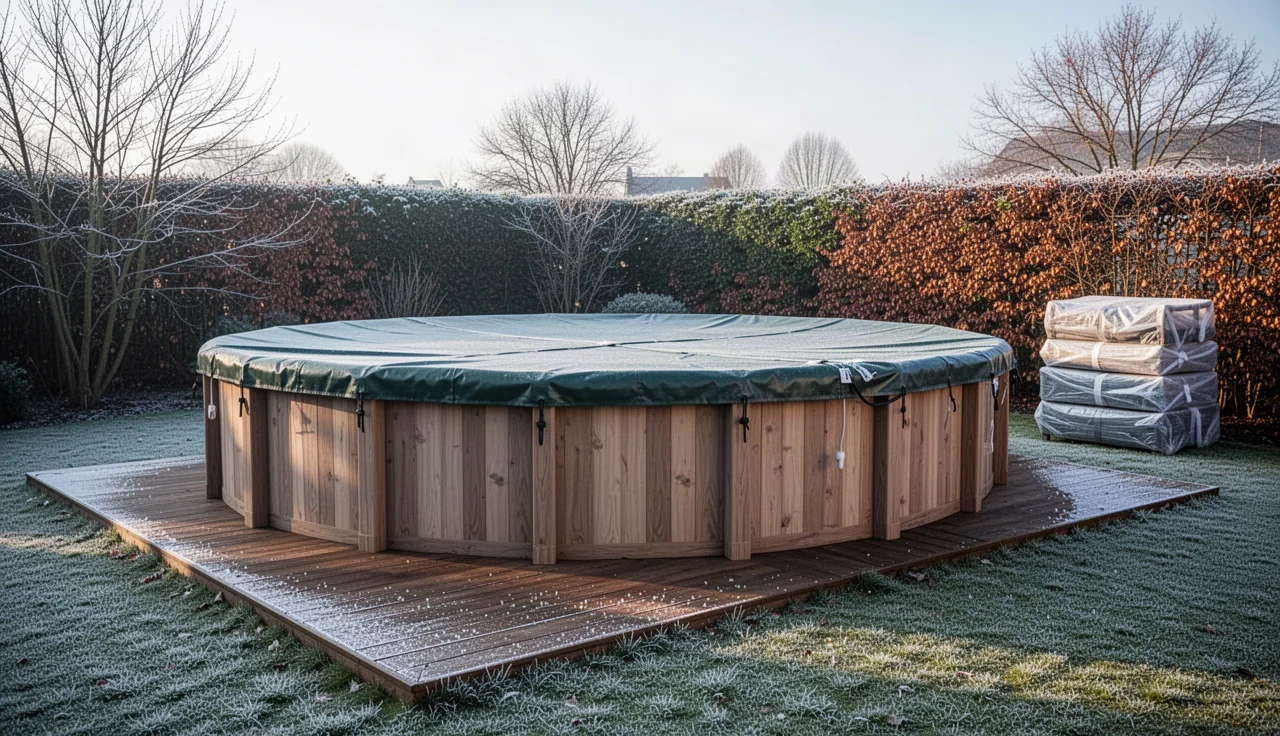
- Install the winter cover. Use a cover designed for your pool shape and size. Secure it with a cable and winch or cover clips so wind cannot lift it. A pillow or inflatable air cushion under the cover helps shed rain and ice in snowy climates.
- Store chemicals safely. Keep them dry, locked, and away from children and pets. Pool chemicals react dangerously if they get damp or mix.
If you want the longer version with more detail on chemical choice and equipment storage, we have a full guide on how to winterize an above ground pool the right way.
What You Need Before You Start
| Item | Purpose | Notes |
|---|---|---|
| Pool brush and vacuum | Remove debris and algae | Do this before any chemical step |
| Test kit or strips | Check pH and alkalinity | Adjust at least 48 hours before closing |
| Winter algaecide or shock | Prevent spring algae bloom | Follow manufacturer dosing exactly |
| Winter cover and cable | Protect water and block debris | Measure your pool before buying |
| Drain plugs and storage bin | Protect pump and filter from freezing | Store plugs inside the pump basket |
Quick note: some links in this article are Amazon affiliate links, they support the blog at no extra cost to you. For covers, chemicals, and closing kits, check the Outsunny garden range or the Intex pool accessories on Amazon for current options and prices. Do not buy a cover before you know your pool's exact dimensions, because a loose cover fails fast in winter wind.
Common Winterizing Mistakes That Cost You in Spring
The fastest way to ruin your spring opening is to rush the chemical step. Balancing pH is not optional. Water that is too acidic corrodes metal parts all winter; too alkaline causes scale. Another common failure is skipping the algaecide because the water "looks fine now." Winter algae grows slowly in cold water, but it is alive and waiting. The third big one is leaving the pump and filter outside with water inside: a single freeze cracks the housing and you are buying a new pump in May.
Who this guide is for: owners of standard above ground pools who want a straightforward seasonal routine. Who should skip the DIY and hire a pro: anyone with a large in-ground pool, complex plumbing, or a heater with gas connections. This is general information, not professional advice. For any structural or technical work, consult a qualified pool professional.
FAQ
Do I need to drain my above ground pool completely for winter?
No. Drain only to just below the skimmer or return fitting, depending on your pool design. The remaining water supports the liner and prevents wind damage. Fully draining a liner pool is a fast way to ruin the liner.
Can I leave my pump and filter outside over winter?
Not safely in freezing climates. Remove them, drain all water, and store indoors. Even a small amount of trapped water can freeze and crack the pump housing or filter tank.
What temperature should the water be before I close the pool?
Most pool professionals recommend closing when water consistently stays below 60°F (15°C). Algae growth slows dramatically at that point, and the chemical treatment lasts longer through winter.
Do I really need a winter cover, or can I just use a tarp?
A fitted winter cover is worth the money. A generic tarp lets debris in, sags into the water, and tears under snow load. Cheap covers fail, and then you are skimming a black lagoon in April.
How long does winterizing take?
For a standard above ground pool, plan for two to three hours including cleaning, chemicals, and equipment removal. The chemical balance step needs a couple of days of lead time before closing.
Winterizing is not complicated, but it is unforgiving if you skip a step. Clean thoroughly, balance the water, protect the equipment, and cover tightly. The hour you spend now is a fraction of what a green spring opening costs in time, chemicals, and frustration.