Gas or Charcoal Grill, Which One Fits You
Gas grills are fast and clean, charcoal grills bring real smoke flavor. Here is the honest breakdown to help you pick the right one for how you actually cook.
By TheYardForge — outdoor and garden gear, analyzed honestly for real backyards
The smell hits you before you even see the grill, charcoal smoke drifting over the fence on a Sunday afternoon. If you are standing in the grill aisle trying to figure out which one makes sense for your patio, the short answer is this: a gas grill is better if you grill often during the week and want heat in ten minutes with almost no cleanup, while a charcoal grill is better if you love real smoke flavor, slower weekend cooks, and do not mind the extra time and ash. Neither one is universally better, but most owners pick based on how often they cook and how much time they actually want to spend managing the fire.
The Real Difference Is Time and Heat
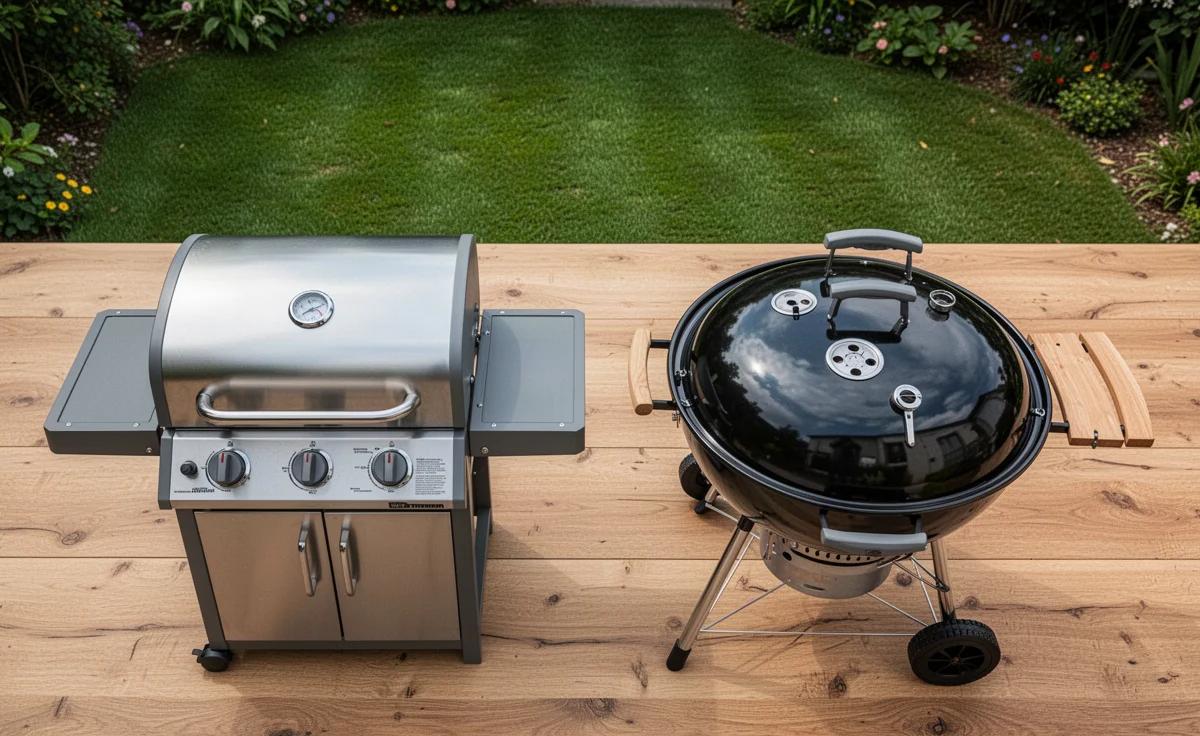
Gas grills, like the popular Weber models, run on propane or natural gas and reach cooking temperature fast. You turn a knob, wait roughly ten minutes, and you are cooking. Temperature control is precise, so weeknight burgers and chicken come out consistent every time. The trade-off is flavor. Gas burns clean, which means you get nice sear marks but almost none of that deep, smoky character.
Charcoal grills run on briquettes or lump charcoal and take longer to get going, usually twenty to thirty minutes before the coals are ready. You manage airflow and coal placement, which is either a relaxing ritual or a chore depending on your personality. What you get in return is real wood smoke, higher direct heat for searing steaks, and that classic crust that gas simply cannot replicate. The trade-off is cleanup: ash, leftover coals, and more time overall.
Key Differences at a Glance
| Criteria | Gas Grill | Charcoal Grill |
|---|---|---|
| Time to cook | About 10 minutes | 20-30 minutes |
| Flavor | Clean, mild | Deep smoke, intense |
| Temperature control | Precise knobs | Manual vent and coal management |
| Weekly use | Excellent for quick dinners | Better for slower weekend cooks |
| Cleanup | Minimal, no ash | Ash and coal disposal required |
| Running cost | Propane or natural gas refills | Charcoal bags each session |
Which One to Pick Based on How You Cook
Pick a gas grill if:
- You cook three to five times a week after work and want speed.
- You live somewhere with fire restrictions or a small balcony.
- You want predictable results without watching the fire.
- You grill vegetables, fish, and thinner cuts that need gentler heat.
Pick a charcoal grill if:
- Flavor is the whole reason you grill in the first place.
- You enjoy the process as much as the food, including the setup.
- You mostly cook thick steaks, ribs, or slow-smoked cuts.
- You do not mind spending extra time on setup and cleanup.
A useful middle path is a gas grill with a smoker box, but the honest truth is that a smoker box helps, it does not replace real charcoal. If you want to dig deeper into what matters when buying, our gas grill buying guide walks through burner counts, materials, and the specs that actually hold up over time.
Common Charcoal Mistakes That Ruin Good Meat
Too many first-time charcoal owners light a full chimney, dump the coals, and throw food on while the fire is still raging. That is how you get a charred outside and a raw center. Instead, wait until the coals are mostly ashed over, then arrange them in a two-zone setup: coals banked on one side, nothing on the other. Sear over the hot side, then move the food to the cool side and close the lid to finish cooking gently. Also avoid lighter fluid unless you enjoy the taste of petroleum in your ribs. A chimney starter with crumpled paper costs around twenty dollars and gives you clean, even heat every time.
Gas Grill Temperature Tricks Worth Learning
Owning a gas grill does not mean turning every burner to high and hoping for the best. Preheat with all burners on high for ten to fifteen minutes, then scrape the grates clean, then adjust. For chicken thighs or pork chops, try indirect heat on a gas grill by lighting only half the burners and placing the meat on the unlit side. This mimics the two-zone control charcoal users rely on and prevents flare-ups from dripping fat. Another habit worth building: check your propane level before guests arrive, not after the grill goes cold mid-cook. Keep a spare tank if you grill more than twice a week.
Small Setup Steps That Make Both Grills Safer
Where you place the grill matters more than people admit. Keep both gas and charcoal units at least ten feet from siding, deck rails, and low tree branches. For charcoal, invest in a metal ash can with a tight lid instead of dumping warm ashes into a plastic trash bin, which is a common way backyard fires start. For gas, do a quick soapy-water leak test on the hose connection at the start of each season; bubbles mean a leak that needs fixing before you light anything. A fifteen-dollar grill mat under either type also saves your deck or patio from grease stains and stray embers.
FAQ
Is charcoal grilling harder than gas?
Charcoal has a steeper learning curve because you control heat with vents, coal placement, and fuel amount. Gas is closer to cooking on a stove, which makes it easier for beginners and faster for daily use.
Which grill is cheaper to run long term?
Gas tends to cost less per session once you own the tank and grill, while charcoal means buying new bags regularly. The exact numbers depend on local propane and charcoal prices, so check your area before deciding.
Can you get smoky flavor on a gas grill?
You can add a smoker box with wood chips and get a mild smoke note, but it will not match the depth of charcoal. If real smoke flavor is your priority, charcoal is the honest answer.
Which grill is better for apartment balconies?
Gas is usually the safer and cleaner option for balconies, but many buildings ban all open flames. Check your lease or building rules before buying either type.
Both grills make great food when used the way they were designed for. Gas rewards frequency and convenience, charcoal rewards patience and flavor, and the right pick comes down to how you actually want to spend your evenings outside.