How to Winterize Your Garden the Right Way
Learn how to winterize your garden step by step. Protect plants, soil, and tools so your spring garden starts stronger and healthier. A practical guide with.
By TheYardForge — outdoor and garden gear, analyzed honestly for real backyards
That first hard frost always sneaks up faster than expected, and suddenly you're out in the dark throwing old sheets over the tomatoes. Winterizing your garden is about taking a few deliberate steps before the cold locks everything in, so your soil, perennials, and tools survive until spring. Based on what actually matters in a real backyard, the process comes down to five tasks: clear spent plants, protect perennials and soil, drain irrigation lines, clean and store tools, and plan for wildlife. Do these before the ground freezes, and spring becomes a cleanup project instead of a rescue mission. Here's what we recommend, plain and simple.
Clear Out the Spent and Diseased Growth
Dead plants left standing all winter become a five-star hotel for pests and fungal diseases. Pull annuals once they've faded, especially tomatoes, squash, and anything that showed signs of mildew or blight. Healthy plant material can go into the compost pile, but anything diseased should go in the trash or municipal yard waste, not the compost. Diseased bits can survive the winter in a pile and reinfect next year's garden.
For perennials, hold off. Many beneficial insects overwinter in hollow stems and leaf litter, so leaving some standing growth until spring helps your local ecosystem. The compromise we suggest: cut back anything mushy or clearly diseased now, but leave ornamental grasses and sturdy stems standing for wildlife and winter structure. You can trim the rest in early spring before new growth appears.
Protect Your Soil and Perennials
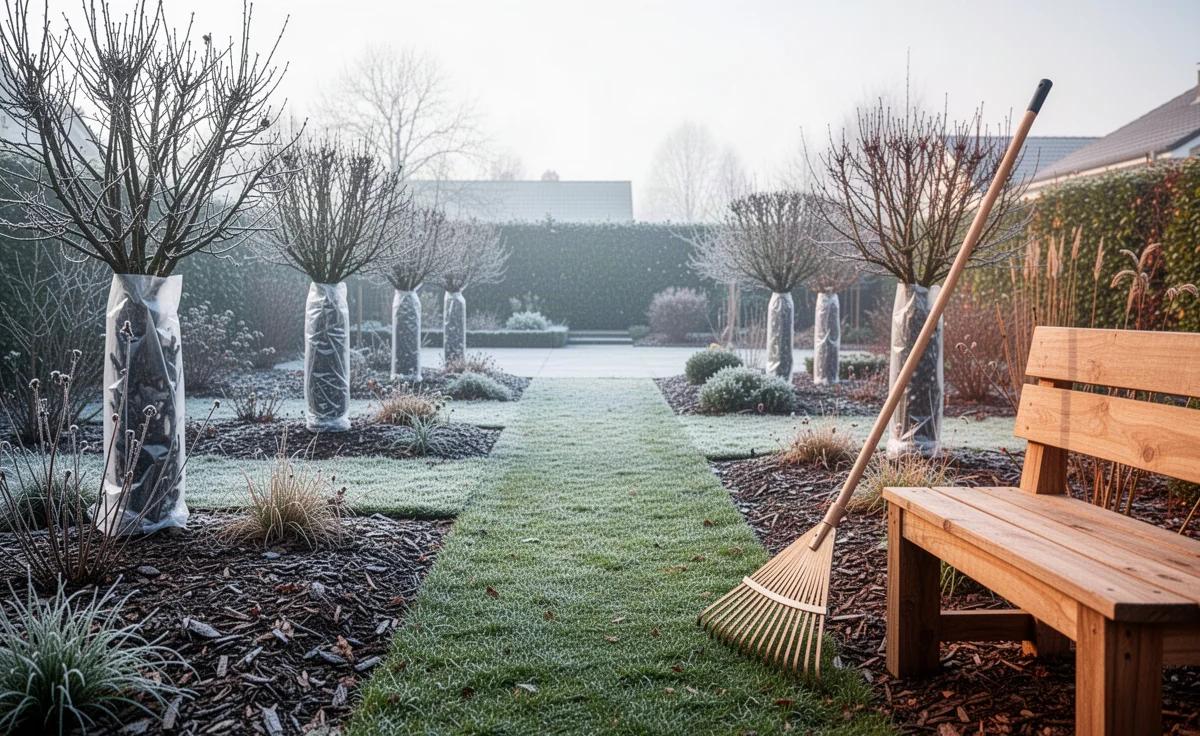
Bare soil erodes, compacts, and loses nutrients over winter. A thick layer of mulch acts like a blanket, moderating soil temperature and preventing freeze-thaw cycles that heave shallow-rooted plants out of the ground. Shredded leaves, straw, or wood chips all work. Apply two to four inches around perennials, trees, and shrubs after the first hard frost but before deep snow arrives.
Don't forget to water evergreens and newly planted trees deeply before the ground freezes. Their roots keep working for a while, and dry soil going into winter is a common cause of winter burn and death. If you have raised beds, top them with compost or a cover crop like winter rye to keep the soil biology fed and protected.
Here's a quick look at what to do in the garden versus what the compost pile needs:
| Garden Task | What Goes Where |
|---|---|
| Healthy spent annuals and leaves | Compost pile |
| Diseased or mildewed plant material | Trash or municipal yard waste |
| Perennial stems and seed heads | Leave standing for wildlife, trim in spring |
| Bare soil around perennials | Mulch with leaves, straw, or wood chips |
| Irrigation lines and hoses | Drain fully, store indoors or covered |
Drain Lines and Store Tools Properly
Water expands when it freezes, and that means burst hoses, cracked irrigation lines, and busted sprayers. Before the first deep freeze, turn off exterior water valves, disconnect hoses, and drain them completely. It's general maintenance, not a complicated fix: how to winterize your garden the right way is mostly about removing what cold weather can destroy.
For tools, follow a simple sequence:
- Scrape off caked-on soil with a stiff brush.
- Wash metal parts with soapy water and dry them completely.
- Wipe down metal surfaces with a light coat of oil to prevent rust.
- Sand any rough wooden handles and rub them with linseed oil.
- Store everything off the ground in a dry shed or garage.
Lawn mowers and string trimmers also appreciate a drained fuel tank or a fuel stabilizer before storage. Nothing kills spring motivation like a mower that won't start because last season's gas turned to varnish.
FAQ
When should I start winterizing my garden? Start after the first light frost but before the ground freezes solid. That's usually late fall, but it varies by your growing zone, so watch your local weather and first-frost dates.
Should I cut back all my perennials in fall? No. Leave ornamental grasses and sturdy stems standing through winter to shelter beneficial insects and add structure. Cut back anything diseased or mushy now, and do the rest in early spring.
Can I leave my garden hose outside all winter? It's risky. Water trapped inside a hose can freeze, expand, and split the hose or crack the fittings. Disconnect, drain, and store hoses indoors or in a covered area before hard freezes arrive.
Do I need to fertilize my garden before winter? Skip heavy nitrogen fertilizers in fall, they push soft new growth that frost will kill. Focus on soil health instead: mulch, compost, and maybe a slow-release phosphorus or potassium blend if your soil test calls for it.
What's one step most people forget? Draining irrigation systems and disconnecting hoses. It's an easy, cheap task, but skipping it can lead to cracked pipes and costly spring repairs. If you're also dealing with a pool, we've covered the same kind of preparation in how to winterize an above ground pool the right way.
A Little Work Now Saves a Lot in Spring
Winterizing isn't glamorous, but it's the difference between a garden that limps into spring and one that jumps. Clear out the bad stuff, protect the soil, drain the water, and put your tools away clean. Your spring self will notice the difference without a single extra seed being planted.
Browse the gear on Amazon · Compare current prices on Amazon