Robot Mower vs Regular Mower What to Pick
Robot mower or regular mower? We compare cost, effort, cut quality, and yard fit so you can pick the right one for your lawn without the hype.
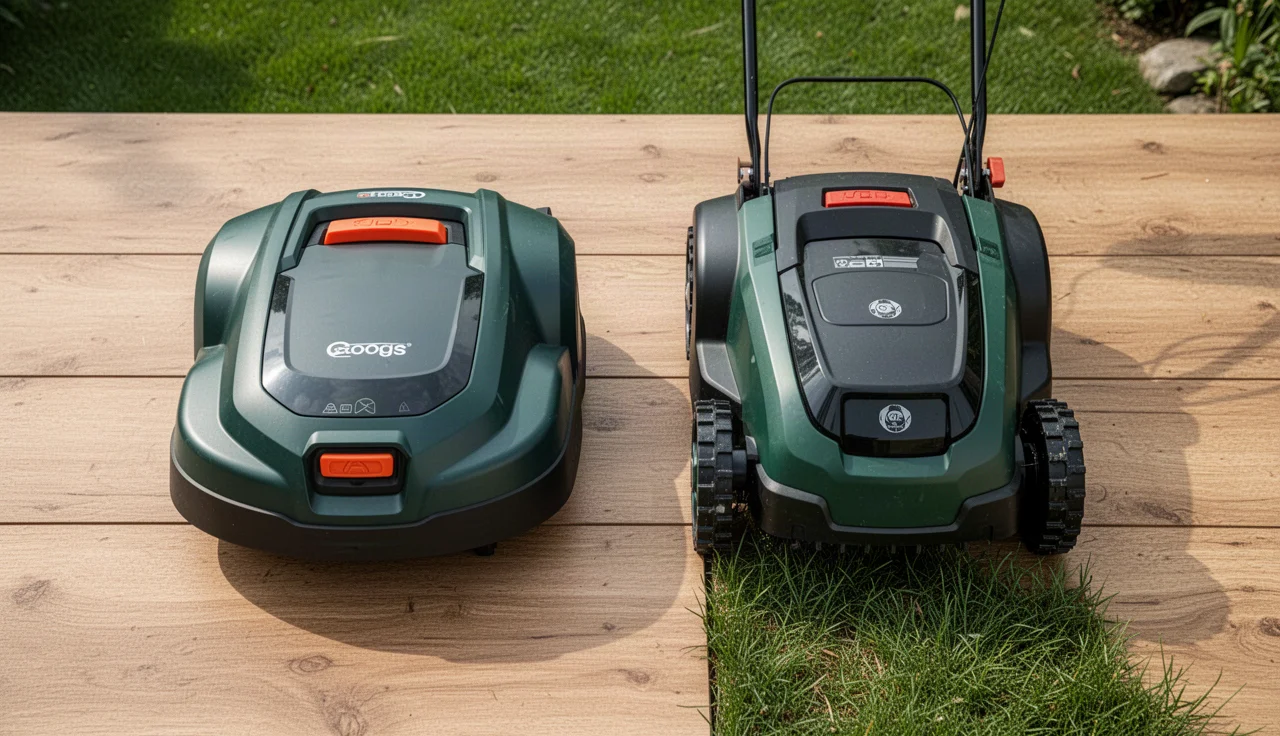
By TheYardForge — outdoor and garden gear, analyzed honestly for real backyards
You're standing in the garage on a Saturday morning, looking at a lawn that needs cutting again, and wondering if a robot could just handle it while you do literally anything else. The short answer: yes, for a lot of yards, but not all of them. A robot mower wins on convenience and time, cutting little and often just like a mulching pro would, while a regular mower wins on upfront cost, speed for large overgrown areas, and raw power on thick or wet grass. If your lawn is flat to gently sloped, under roughly half an acre, and you hate the weekly chore, a robot mower is the better pick. If your lawn is large, bumpy, full of obstacles, or you only mow occasionally, a regular mower still makes more sense. Here's how to decide for your yard.
The Real Differences That Matter
When you compare a robot mower to a regular mower side by side, the biggest split isn't technology, it's mindset. A regular mower is a tool you use in one long session, maybe once a week. A robot mower is a habit you set and forget, cutting small amounts daily or every other day so the lawn never gets long enough to notice.
Here's what actually separates them in practice:
| Criterion | Robot Mower | Regular Mower |
|---|---|---|
| Time you spend | 15-30 min initial setup, then near zero | 30-90 min per cut, every week |
| Upfront cost | Higher, check current prices on Amazon | Lower to mid-range, check current prices |
| Best lawn type | Flat to gentle slopes, simple layout | Any, including bumpy or complex yards |
| Cut quality | Very good on maintained grass, mulches finely | Depends on blade and your effort |
| Wet or thick grass | Struggles, leaves clumps | Handles it with the right mower |
| Ongoing maintenance | Blade changes, occasional rescue from obstacles | Fuel or battery, oil, air filter, blade sharpening |
Quick note: some links in this article are Amazon affiliate links, they support the blog at no extra cost to you.
Who Should Buy a Robot Mower
The robot mower earns its price when your lawn fits its comfort zone. Based on the specs and owner reports, models like the Worx Landroid or Husqvarna Automower shine on lawns under about half an acre with a simple, open shape.
Best for you if:
- You have a small-to-medium, relatively flat lawn
- You travel often or work long hours
- You want the mulching benefit without buying a mulching kit
- You'd rather pay for time than spend it pushing a mower
Skip it if:
- Your lawn is over half an acre with multiple zones
- You have steep slopes, narrow gaps, or lots of obstacles
- You let grass grow tall between cuts, robot mowers hate tall grass
- You need one mower for rough, uneven, or very thick turf
The honest limitation: robot mowers are not set-and-forget for everyone. They need boundary wire laid correctly, occasional rescues when they get stuck, and a yard that doesn't resemble an obstacle course. On the wrong property, they become a frustration instead of a convenience.
Who Should Stick With a Regular Mower
A regular mower, gas or battery, remains the flexible workhorse. It doesn't care if your lawn is bumpy, irregular, or full of trees. You push or ride, you finish the job in one go, and you store it for a week.
Best for you if:
- Your lawn is large, over half an acre
- You have thick, fast-growing grass that needs a serious cut
- You enjoy the Saturday routine or want the exercise
- You have a complex yard with slopes, tight corners, and flower beds
Skip it if:
- You dread the weekly chore and would genuinely pay to skip it
- Your lawn is small enough that a 30-minute mow feels wasteful
- You want the healthier lawn effect of frequent, light mulching
The honest limitation: a regular mower demands your time, every single week, from spring to fall. It's also louder, needs storage space, and for gas models adds fuel and maintenance. Battery mowers fix the noise and fumes but still need your legs and your schedule.
How to Decide in 4 Steps
- Measure your lawn. Under half an acre and reasonably open? A robot mower is viable. Over that? A regular mower is the safer bet.
- Check the terrain. Walk the lawn and note slopes, narrow passages, and obstacles. If you can't draw a clean boundary, a robot will struggle.
- Count your weekends. If you have more money than free time, the robot's convenience premium is worth it. If money is tighter than time, a regular mower wins.
- Pick a model and check current prices. For a robot, start with the Worx Landroid line. For a regular mower, compare battery options for small lawns and gas for large. We also have a guide to budget robot mowers that actually work if you're curious whether a cheap robot is worth it.
Related reading
FAQ
Is a robot mower worth it for a small lawn? For a flat, open lawn under a quarter acre, yes, often. The mowing is handled daily and you reclaim your weekends, though you'll pay more upfront than a simple push mower.
Can a robot mower replace a regular mower completely? On the right property, yes for weekly maintenance. But you'll likely still need a string trimmer for edges and a backup plan for the first spring cut if grass gets long.
Do robot mowers cut as well as regular mowers? On maintained grass, robot mowers cut very well because they mow frequently and mulch finely. On long, wet, or very thick grass, a regular mower does a much cleaner job.
How long do robot mower blades last? According to manufacturer guidance, small blades typically need replacing every 1-3 months of mowing season, depending on lawn size. They're inexpensive, but it's ongoing maintenance.
Are regular mowers cheaper to run? Upfront, almost always. A good gas or battery mower costs less than an entry robot. Over years, the robot saves you time, not money.
The Takeaway
Pick a robot mower if your lawn is small and simple and your time is worth more than the premium. Pick a regular mower if your lawn fights back with size, slope, or thick grass. The right choice isn't about which machine is better in general, it's about which one fits the yard you actually have.